Corporate Event Transportation Safety Standards
Table of Contents
What Corporate Event Transportation Safety Standards Cover
FMCSA Motor Carrier Safety Requirements for Event Transportation
Duty of Care: Your Legal Responsibility as an Event Planner
How to Vet a Luxury Chauffeur Service for Safety and Compliance
Corporate Ground Transportation Risk Management Best Practices
Vehicle Maintenance, Driver Certification, and Safety Audits
Insurance, Emergency Response, and Incident Reporting
Conclusion
Frequently Asked Questions
Last Updated: September 25, 2026
What Corporate Event Transportation Safety Standards Cover
Corporate event transportation safety standards are the regulations, best practices, and protocols that protect passengers, drivers, and the public during business travel and special events. They cover vehicle maintenance, driver qualifications, insurance, emergency response, and federal compliance. Event planners must understand these standards because they bear legal responsibility for guest safety.
This scope includes vetting providers for licensing and insurance, ensuring vehicles pass safety inspections, verifying driver certifications, and establishing incident reporting procedures. Documentation of compliance protects your organization from liability.
FMCSA Motor Carrier Safety Requirements for Event Transportation
The Federal Motor Carrier Safety Administration (FMCSA) establishes baseline safety standards for commercial transportation, including corporate events. Motor carrier safety requirements mandate vehicle maintenance schedules, driver hours-of-service limits, and inspection protocols. Any transportation provider for corporate event transportation safety must comply with FMCSA regulations regardless of passenger type.
Key FMCSA requirements include documented vehicle inspections, driver medical certification, and safety records. Drivers cannot exceed 11 hours of driving within 14 hours and must maintain a current commercial driver's license with appropriate endorsements. Providers must carry federal minimum liability insurance. Verify compliance through the FMCSA's Safety and Fitness Electronic Records (SAFER) system before booking.
Pro Tip Request the FMCSA carrier number and verify it directly through the SAFER database. This takes five minutes and eliminates guesswork about whether a provider actually meets federal standards.
Duty of Care: Your Legal Responsibility as an Event Planner
Your duty of care as an event planner creates a legal obligation to exercise reasonable care in selecting and monitoring transportation vendors. Courts have held event organizers liable for transportation injuries when they failed to exercise adequate care in vendor selection, oversight, or contingency planning, even when the provider was directly at fault. This transforms corporate event transportation safety into a genuine risk management priority with direct legal and financial consequences.
The Three Pillars of Demonstrable Duty of Care
Event planners must establish three documented pillars to demonstrate they exercised reasonable care:
Pre-Event Vendor Audit, Conduct a written evaluation including: FMCSA carrier verification through SAFER, active liability insurance with your organization as additional insured, 12-month safety inspection records, driver background checks, and current commercial licenses and medical certifications. Document findings with dates. Do not proceed if any element is missing or raises concerns.
Ongoing Monitoring and Communication, Assign a single point of contact to maintain direct communication with the provider. This contact should have real-time access to driver information, vehicle details, and route confirmation. Request incident reports within 24 hours of any occurrence. Maintain a log of all communications.
Contingency Planning and Decision Authority, Document contingency procedures in advance. If a provider cancels, appears unprepared, or reports safety concerns, you must immediately decide: find an alternative, reschedule, or cancel. Courts view acceptance of substandard service as failure of duty of care. Document your decision and reasoning.
Real-World Application
Example: If a vehicle breaks down and the provider offers a replacement from an unfamiliar subcontractor, your duty of care requires you to verify that vehicle and driver meet your standards before accepting it. Accepting it to avoid disruption exposes you to liability if an incident occurs.
If a driver appears impaired or a vehicle fails inspection, refuse service and arrange alternatives. Document this refusal and remedial action.
The Financial and Reputational Stakes
A single incident can result in lawsuits, regulatory investigations, and reputational damage. Documentation of vendor vetting, monitoring, and contingency decisions is your primary defense against negligence allegations. Skipping vetting or accepting substandard service exposes your organization to unlimited liability.
Watch Out Duty of care is not a legal theory, it is a documented practice. Keep written records of every vendor evaluation, communication, and decision. These records are your evidence that you exercised reasonable care.
How to Vet a Luxury Chauffeur Service for Safety and Compliance
Vet a luxury chauffeur service systematically: request documentation of licensing, insurance, and FMCSA compliance; proof of driver background checks, medical certifications, and safety inspection schedules. Hesitation or vague answers are red flags.

Examine maintenance records and fleet age. Newer vehicles with documented maintenance indicate safety prioritization. Ask about incident reporting and records of accidents or violations. Request and call references from corporate clients.
Interview the assigned driver. Professional chauffeurs should demonstrate knowledge of safety protocols, vehicle operation, route planning, and emergency procedures. If a service cannot arrange a pre-event driver meeting, that's a warning sign.
Watch Out Never book a transportation service based on price alone or without verifying insurance. A single incident with an uninsured vehicle can expose your organization to unlimited liability, easily exceeding any savings from a cheaper provider.
Corporate Ground Transportation Risk Management Best Practices
Effective risk management for corporate ground transportation begins with a documented transportation policy that all event planners follow consistently. This policy should specify minimum vendor requirements, approval processes, contingency procedures, and technology standards. Require all vendors to carry liability insurance with your organization listed as an additional insured party. This ensures coverage applies if an incident occurs during your event.
Core Policy Framework
Implement a pre-event checklist that includes vendor confirmation, driver verification, vehicle inspection confirmation, route planning, and technology setup. For events with multiple vehicles or complex logistics, assign a single point of contact at your organization to coordinate with the transportation provider. This person should have direct contact information for the driver and the company's operations team and should be available throughout the event to address any issues.
Establish clear communication protocols. Drivers should have your event contact's phone number, and your contact should have real-time tracking information if available. For high-profile events or large groups, consider requesting GPS tracking as a condition of the contract. Document everything: confirm the number of vehicles, passenger count, pickup times, drop-off locations, and any special requirements.
Technology-Driven Safety Monitoring: A Modern Standard
Modern corporate transportation risk management now includes telematics and driver behavior monitoring systems, a capability that separates safety-first providers from standard operators. Telematics systems track vehicle location, speed, acceleration, braking patterns, and adherence to planned routes in real time. Driver behavior monitoring uses in-cabin cameras and sensors to detect distracted driving, fatigue indicators, and unsafe maneuvers.
When vetting transportation providers, ask whether they use telematics and what data they can provide to your event contact during the event. Professional providers should offer:
Real-time GPS tracking, Your event contact can view vehicle location, estimated arrival times, and route adherence on a dashboard or mobile app.
Speed and acceleration alerts, The system flags instances where drivers exceed posted speed limits or brake suddenly, indicating unsafe driving patterns.
Driver behavior scoring, Providers can share a driver's safety score based on months of data, showing whether the driver has a pattern of safe or risky behavior.
Incident documentation, If an accident occurs, telematics data provides objective evidence of vehicle speed, braking, and positioning at the moment of impact.
Integrating Health and Sanitation Standards
Sustainability and Safety Correlation
Documentation and Continuous Improvement
Key Takeaway A documented transportation policy, pre-event checklist, technology integration, and continuous improvement process reduce risk by creating consistency, accountability, and objective data. Organizations that follow systematic vetting procedures and leverage modern safety technology demonstrate they took reasonable care, critical if any incident occurs.
Vehicle Maintenance, Driver Certification, and Safety Audits
Vehicle maintenance directly impacts safety outcomes. Professional transportation providers should maintain detailed service records showing regular oil changes, brake inspections, tire rotations, and system checks. Request evidence that vehicles undergo pre-trip safety inspections before every use, not just periodically. This inspection should verify brake function, tire condition, lighting, fluid levels, and emergency equipment.
Insurance, Emergency Response, and Incident Reporting
Liability insurance is non-negotiable. Require all transportation providers to carry commercial general liability insurance and vehicle liability insurance meeting or exceeding state minimums. For corporate events, request that your organization be named as an additional insured on the policy. This protects your organization if an incident occurs. Ask for proof of insurance in writing, with policy numbers and effective dates, and verify that coverage is active before the event.
Conclusion
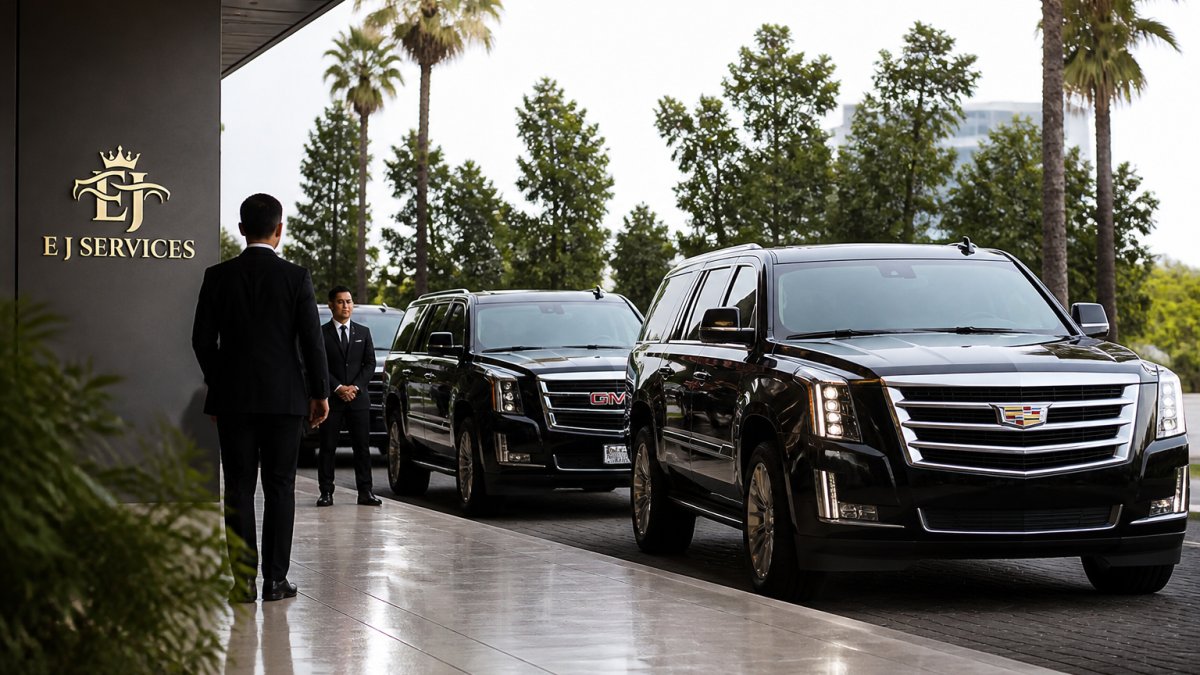
Corporate event transportation safety standards protect your guests, your organization, and your reputation. The process of selecting a transportation provider should never be rushed or based solely on cost. EJ Services understands this responsibility and maintains a meticulously maintained fleet of late-model Cadillac Escalades and GMC Yukon XLs with professional chauffeurs available 24/7. Our commitment to safety standards, driver certification, and vehicle maintenance ensures your corporate guests arrive safely and make a positive impression.
Frequently Asked Questions
What are the federal safety regulations for private corporate event transportation?
Corporate event transportation must comply with DOT regulations, including driver licensing, vehicle maintenance standards, and insurance requirements. FMCSA motor carrier safety requirements apply when transporting passengers for compensation. Vehicles must pass regular safety inspections, drivers must maintain clean driving records, and companies must carry adequate liability insurance. The specific regulations depend on vehicle size and passenger count, but all commercial transportation requires documented safety protocols and compliance monitoring.
How do I verify a transportation provider's DOT compliance and safety record?
Request proof of FMCSA registration, current insurance certificates, and driver certifications. Ask for their safety audit results and maintenance logs. Verify drivers hold valid commercial driver's licenses (CDL) appropriate for the vehicle class. Check the FMCSA Safety Management System database for any violations or incidents. Request references from corporate clients and review their safety protocols. A reputable provider will provide documentation without hesitation and explain their compliance procedures clearly.
What is the event planner's duty of care for guest transportation safety?
As an event planner, you have a legal duty of care to ensure reasonable safety measures for guest transportation. This includes selecting vendors with proper licensing, insurance, and safety records; verifying driver qualifications; confirming vehicle maintenance standards; and ensuring transportation policies meet industry standards. You're responsible for communicating pickup times clearly, confirming vehicle capacity, and addressing any safety concerns. Documenting your vetting process and vendor compliance protects both your guests and your organization from liability.
What should I look for when vetting a luxury chauffeur service?
Verify FMCSA registration, current liability insurance, and driver certifications. Request maintenance records for their fleet and ask about their safety protocols. Confirm drivers undergo background checks and drug screening. Ask about their incident reporting procedures and emergency response training. Check vehicle condition, cleanliness, and safety features. Request client references and ask about their experience with multi-vehicle coordination for large events. A quality service will demonstrate transparency about their operations, compliance, and safety standards.
Book Online


Comments